
Identifying waste heat potential is only the first step. Transforming those findings into a technically robust and investment-grade network design is the critical bridge between a conceptual idea and a funded project.
We leverage nPro, an advanced German simulation platform purpose-built for thermal decarbonization. By combining Sustainable Heating’s independent engineering expertise with high-fidelity modeling, we transition seamlessly from opportunity identification to detailed engineering, accelerating project delivery while providing the third-party validation necessary to overcome bias and secure stakeholder approval.
From Data to Investment-Grade Decisions
By synthesizing real-world operational data with geospatial intelligence, our modeling approach allows us to:
- Map optimal pipeline routes across complex industrial sites.
- Simulate dynamic heat flows under varying seasonal loads and process cycles.
- Precision-size equipment and pipe diameters to maximize linear heat density and reliability.
- Calculate hydraulic requirements, pumping loads, and thermal losses with hourly precision.
- Stress-test multiple scenarios, including future expansions and multi-vector energy sharing.
This rigorous modeling ensures that every network we design is technically resilient, cost-optimized, and de-risked for funding and procurement.
Case Study: Industrial Waste Heat Recovery (steel manufacturing)
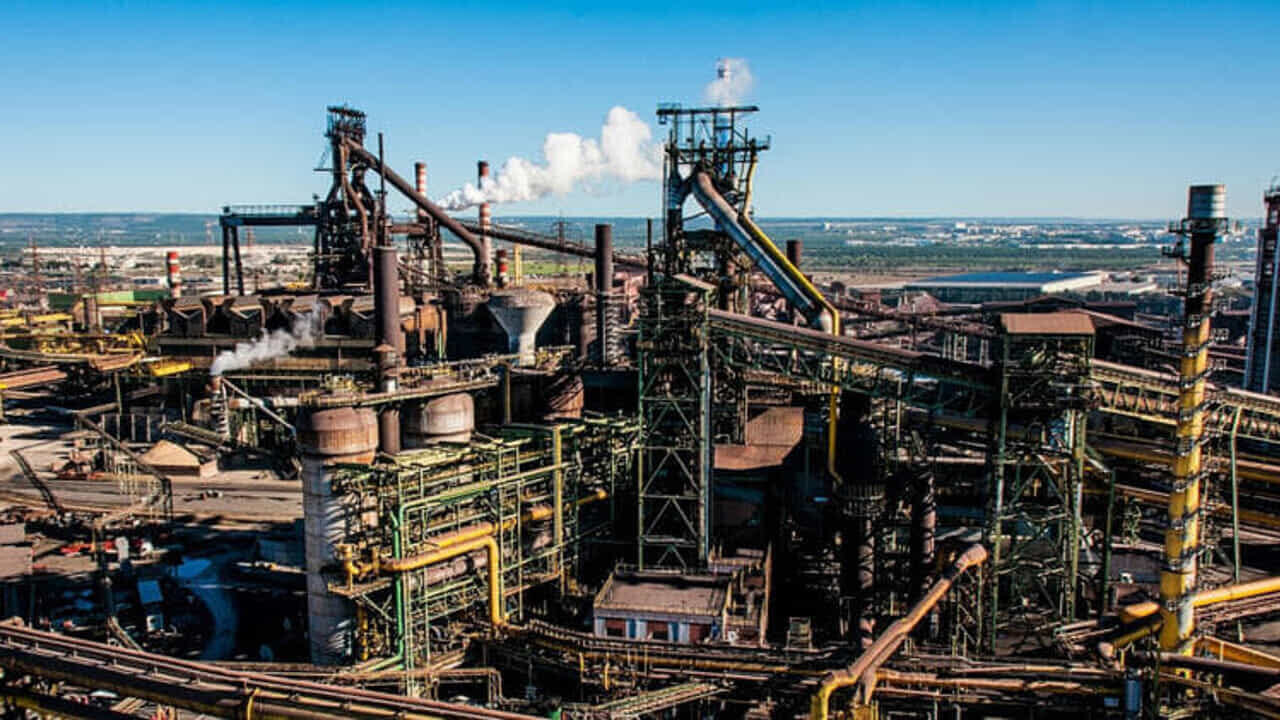
This project involved the development of a sustainable and efficient energy supply concept for one of Europe’s largest steel plants, transforming wasted thermal potential into a technically robust engineered solution.
Key Facts
The Challenge: The facility comprised 19 diverse non-residential buildings, including warehouses, specialized production plants, and offices, collectively requiring 389,502 MWh annually for high-temperature industrial processes and space heating
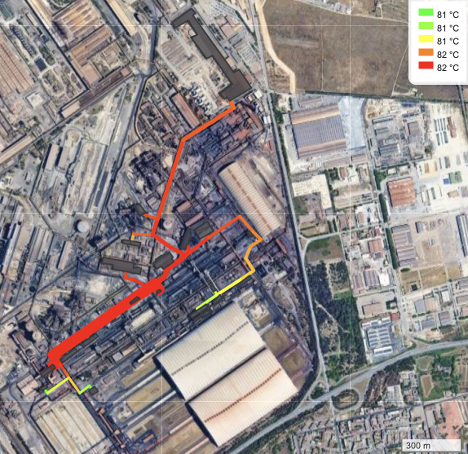
The Solution: Our analysis identified a consistent source of 80°C waste heat recovered from process steam condensation during the coking process, which was previously vented or underutilized. Using the nPro platform, we developed a preliminary design that:
- Integrated a 4 km buried distribution network linking the primary waste heat source to multiple sinks
- Decarbonized complex processes, repurposing recovered heat for process water pre-heating, warehouse drying, and domestic hot water
- Ensured operational stability through precise hydraulic balancing and temperature mapping.
- CO2 savings: Substantial reduction in emissions by displacing fossil-fuel-based heating and decreasing the volume of industrial gases sent to safety flares.
The Result: By displacing fossil-fuel-based heating and reducing industrial gas flaring, the design provided a bankable rationale for infrastructure investment, turning wasted heat into a lever for both environmental compliance and operational efficiency
The design was further optimized to minimize CAPEX, reduce thermal losses, and allow for future extensions — including the possibility of connecting to nearby facilities.
From concept to funding-ready proposal
By combining detection with network design, we deliver a package that bridges early-stage opportunity assessment and detailed engineering.
The result: investment-grade proposals that can move straight into permitting, funding, and procurement.
How We Support Your Project
• Pre-Development Site Analysis
We assess potential sites for new developments, evaluating environmental impact, technical feasibility, and energy demand potential.
• Site and Master Planning
We design comprehensive decarbonization and energy transition plans for large-scale developments, campuses, or districts.
• Regulatory & Funding Alignment
We create actionable plans that align with compliance requirements, capital planning needs, and available funding mechanisms.
• Advanced Modeling & Simulation
We apply cutting-edge modeling tools to quickly simulate scenarios and identify high-impact, cost-effective solutions.
Our Approach in Action
In the case study above, our modeling showed that the proposed thermal network could deliver:
- A linear heat density of ~98 MWh/m, far above the typical economic viability threshold.
- Stable operation with constant base load from process heat, supplemented by seasonal heating demand.
- Significant emissions reduction by replacing gas-fired heating with recovered industrial heat.
This type of analysis doesn’t just confirm technical feasibility—it demonstrates economic viability, enabling stakeholders to make confident investment decisions.
The Bigger Picture
Waste heat recovery is one of the most underutilized levers in industrial decarbonization. In heavy industry, where processes often release consistent low- to medium-grade heat, a well-designed district heating network can:
- Cut CO₂ emissions by displacing fossil-fuel-based heating.
- Reduce energy costs through fuel savings and improved process efficiency.
- Create infrastructure value that serves both current operations and future expansions.
Get in touch if you want to turn waste heat potential into a fully engineered, fundable solution.